

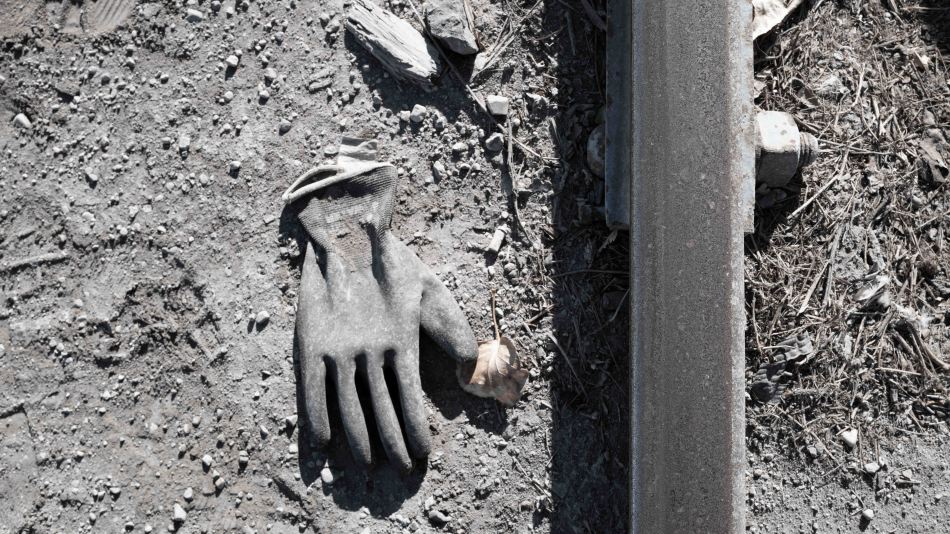
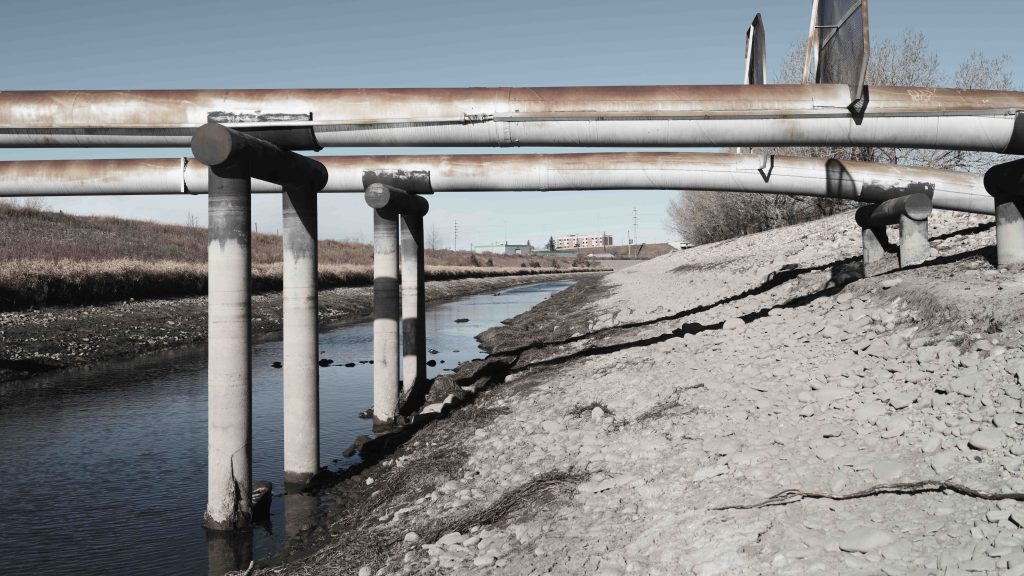
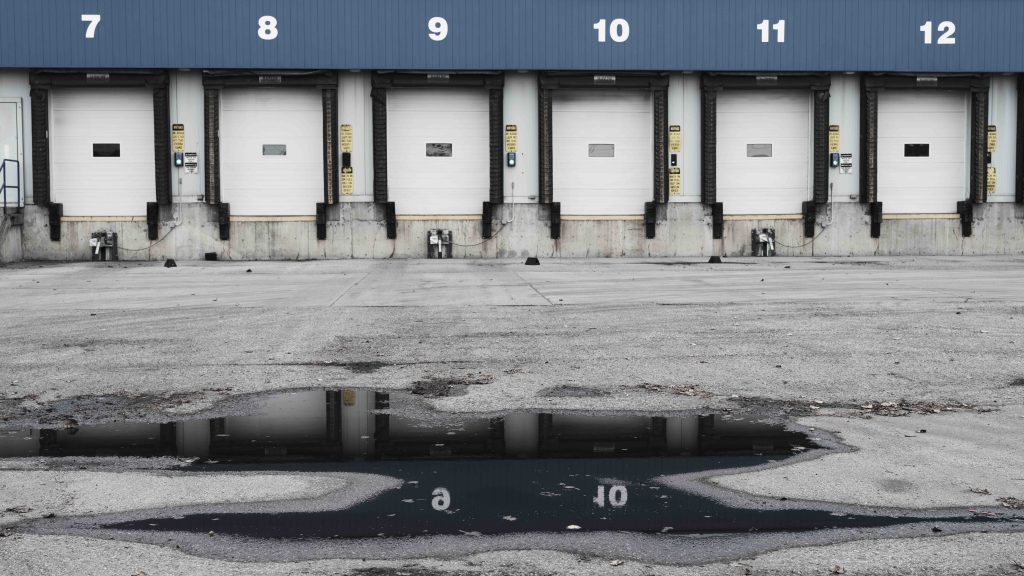
Inspired by my reading of the 2026 Booker Prize-winning novel The End of Everything by M. John Harrison, I made a series of photographs in an industrial landscape in Calgary, Canada.
I’ve bought and read Booker Prize-winning novels before. Douglas Stuart’s Shuggie Bain (2020), a gritty tale of poverty and addiction in Glasgow, and Orbital, a space-in-one-day travelogue by Samantha Harvey (2024), were acquired after the fact, based on recommendations from family and friends.
I first heard about the 2026 Booker short-listed entries on Jarvis Cocker’s Someday Service on BBC Radio 6 on a Sunday morning in early October. This man of music was on the judging panel for this prestigious literature prize, up there with the Pulitzer Prize and Nobel Prize for Literature. The frontman, lyricist, and singer with Sheffield-born Pulp had Douglas Stuart on his show, talking about his Hebridean Islands-based book John of John (Stuart, 2026). It inspired me to check out the books by the other five contestants, and, from the synopses, I made my own list of two. One was Black Bag by Luke Kennard (2026). The other was The End of Everything by M. John Harrison. On November 9, it was announced that Harrison was the 2026 Booker Prize winner.
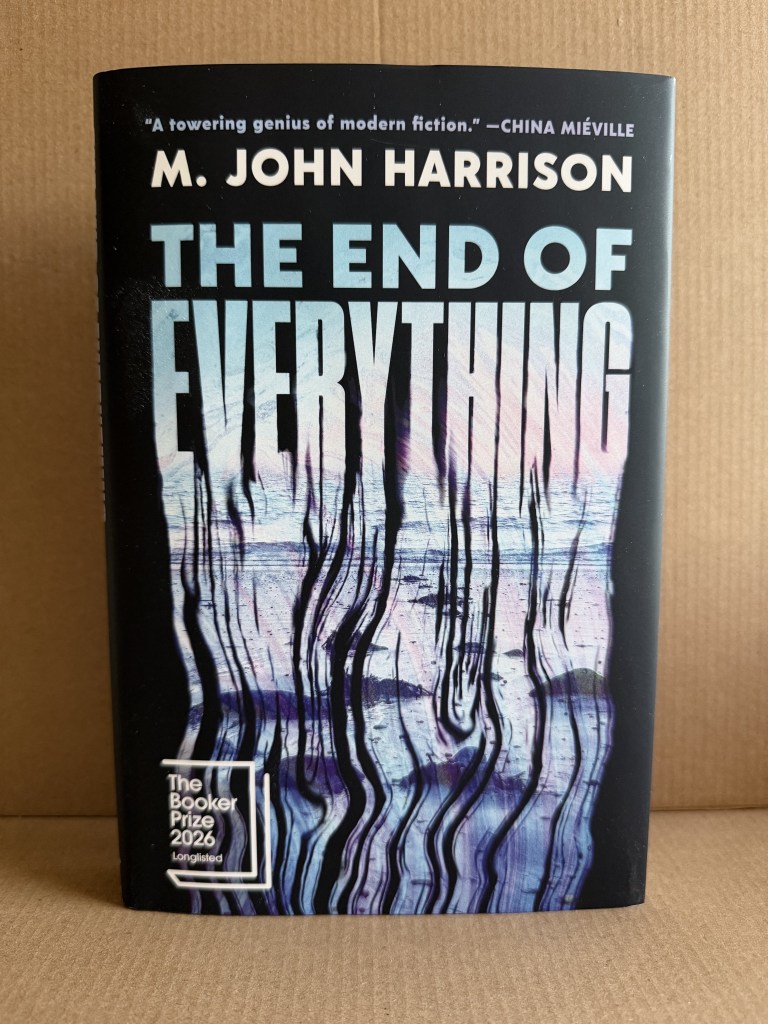
My usual go-to bookstore, Indigo, had no copies, but a new and independent place was opening in Calgary (now, there’s a thing). I resolved to visit Mountain Goat Books soon after its opening over the Thanksgiving weekend. Located with strategic vision between a wine shop and a café, it was surprisingly quiet until I realized that the Calgary Farmer’s Market opposite was closed on Mondays and Tuesdays. Myka and David, the founders, have curated and designed a beautiful green-walled haven for book lovers, with the relaxed feel of an aspen copse in the natural Foothills of the Canadian Rockies.
I got out my Moleskine notebook to check the publication details, and to my amazement, a copy of The End of Everything was on the crafted timber shelves. Within a couple of days, I had finished reading it.
It’s an absurdist, seaside catastrophe movie.
When Harrison was asked in a quick chat on YouTube with the Booker Prize people to describe his book in six words or less, he called The End of Everything “an absurdist, seaside catastrophe movie.” It’s the 81-year-old author’s 13th novel (an age record for Booker Prize winners) and one of his several science fiction (SF) books, a genre neglected by these international prizes. It’s a short book (198 pages) of industrialized fiction, SF and more, poetically written and rich with uncertainty over the state of an occupied land and the survival of its human nation. Dr. Mary Beard, chair of the Booker Prize judging panel and author of SPQR: A History of Ancient Rome (2015), said of his winning book: “You’ll find words that make you laugh, make you scream and change the way you see the world.”
Harrison is not a fan of long novels. “I think we should bring Novellas back,” he says in his quick YouTube chat with The Booker Prize (see above) and adds: “I find long books really boring. They drain my energy and they don’t put as much back as you put into them.”
In an interview in a London pub with The Guardian’s Chris Power in 2026, Rugby-born Harrison, known by his friends as Mike, gives away some details of the uncertainties in the interface between the alien forces called the iGhetti and the humans going through “a bad patch” in their lives in an apocalyptic part of England between the Kent coast and London.
His book benefits deeply (or depthier, as he calls it) from this confusion around the character, thinking and purpose of the invaders, and their impact on the life happenings of his main human characters: Philip, a beachcomber and salvage merchant and his survival-driven Aunt Marnie.
Bleak Prose
Cambridge University professor Robert Macfarlane, himself an excellent writer on culture, climate and countryside, describes Harrison as “one of the restless fathers of modern SF, among the most brilliant novelists writing today.” (The Guardian, 2013). He continues to say, after re-reading Climbers, Harrison’s novel published in 1989: “His prose is often described as bleak, but in fact it practises a parity of gaze. He offers lucidity without pity, but without rancour either. Although the fierce ease with which capitalism husks humanity is one of his main concerns, though debris (emotional and material) is one of his chief preoccupations, and though rupture is the texture that most attracts his eye, his vision is not devoid of either tenderness or hope.”
Sensing the Tide
My sensory connections with The End of Everything brought Harrison’s dystopian novel alive and kicking up the sand for me. I recalled stumbling walks along wet and windy shingle beaches in England and Scotland; the marine-salty, cabbage smell of sea kale (Crambe maritima). Tea times with Brown Betty teapots over red-and-white chequered Gingham tablecloths in seaside cafés, and the vinegar and hot-fat smells of a fish-and-chip shop battering around the corner. On a cultural level, the novel got me thinking about authoritarian political control, and direction (or lack of it) over our collective sustainable human future. Those thoughts crystallized as I recalled an ancient historical story and a painting by a cubist artist.
King Cnut
The story described by Henry of Huntingdon in his Chronicle took place around 1028 AD, close to Harrison’s described beaches, maybe down the English Channel coast at Bosham, West Sussex (there are other contending places). It’s a story of humility, not arrogance, of King Cnut (Canute) of England, Denmark and Norway. To convince his courtiers and unflinching supporters that monarchs had no divine power, Cnut sat on his throne on the beach and commanded the tide not to come in. It did, of course, and he knew that. He was incapable of changing nature, and got his feet wet to prove a point that still needs to be made to certain contemporary political leaders about their limited worldly capabilities.
The Tragedy
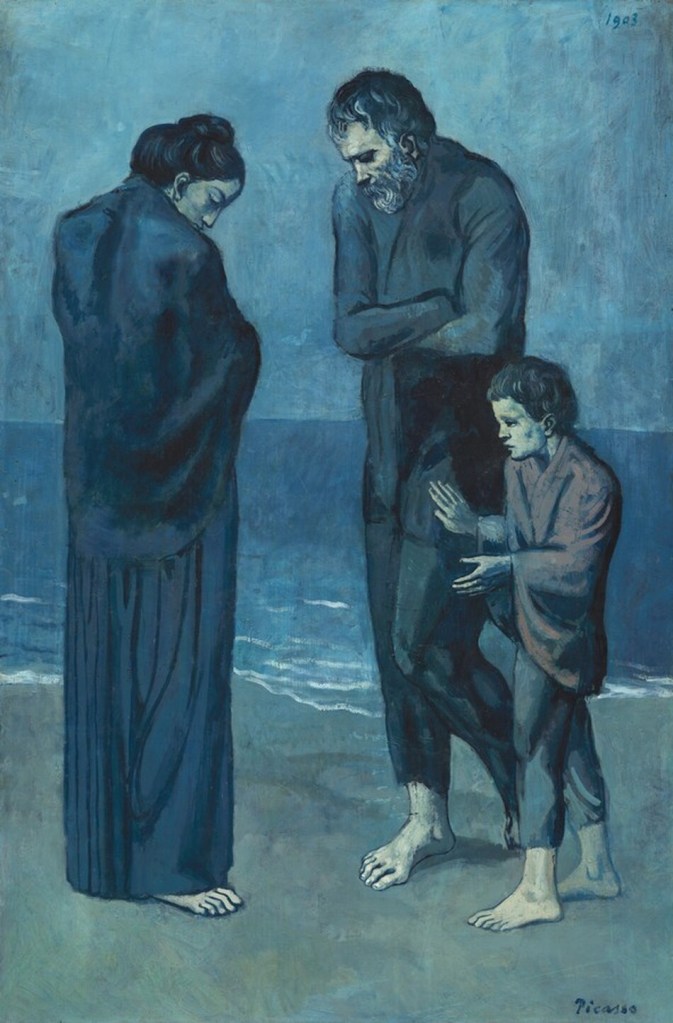
The painting is by Picasso and was made in 1903. It’s called The Tragedy (also called Poor People by the Sea). It’s a sad gathering, in the subdued light of a miserably cold morning; a family lost in poverty, stranded on a beach. Painted mostly in hues of grey and blue, it has the colour palette that I see in the pages of Harrison’s book. For several years, I had a copy of this painting, a framed print that I annotated with a speech bubble for the father figure saying “Ah’m frozen stiff.” He might have said, “Unless we can get out of this bad patch, it’s the end of everything”.
Industrialized fiction turned into pictures
My nostalgia for the British seaside mixed with the novel’s industrial cast of scrapyards and derelict buildings led me to explore alternative storyboards and film locations. I contemplated places proximal to home that might substitute for the Kentish beaches and settlements of Harrison’s cinematographic novel.

I started a photography project searching for a single old factory in Calgary, which serendipitously spread to the whole Foothills Industrial Area after I mixed up some firm names. My adventures with the camera placed me in context with storage facilities awaiting deliveries of consumer goods; rusted, overgrown rail tracks bedded on beach-like shingle; piles of creosote-impregnated sleepers and scattered metal hardware; and washed-up debris in a low, slow-flowing canal bridged by corroded pipelines daubed in graffiti.
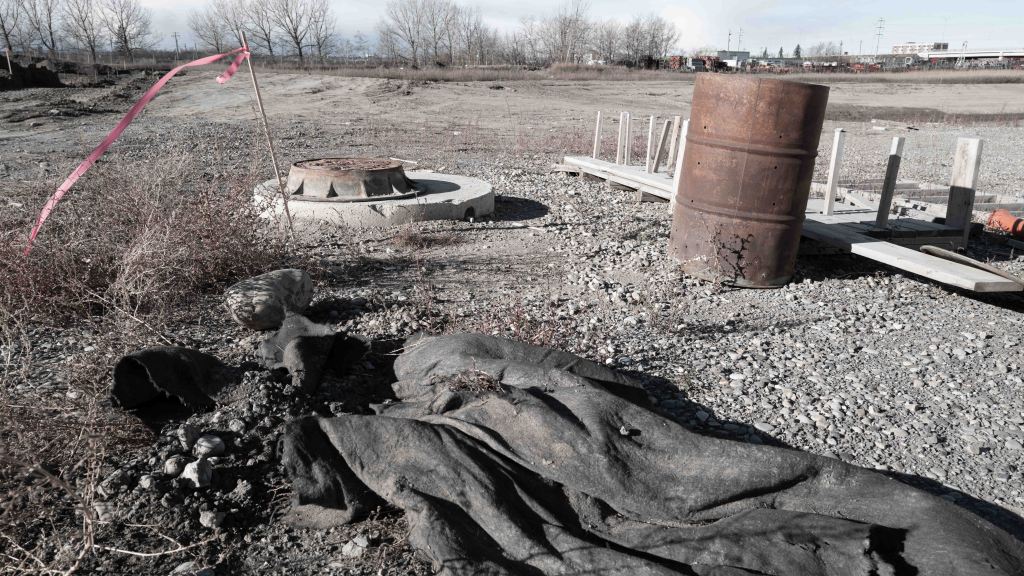
These are features from a previous industrial age: a series of pictures, inspired by the words in a novel that challenges our thinking about our convergence with the next one.
Thank you for reading!
References
Beard, M. (2015). SPQR: A History of Ancient Rome. Liveright, New York.
Booker Prizes (2026). A quick chat with M. John Harrison [YouTube video]. Retrieved November 10, 2026, from https://www.youtube.com/watch?v=HSF3wE7EEa0
Cambridge University (n.d.). Prof. Robert Macfarlane. Retrieved November 10, 2026, from https://www.english.cam.ac.uk/person/robert-macfarlane
Harrison, M.J. (2026). The end of everything. Riverhead Books, New York
Harrison, M.J. (n.d.). The M John Harrison blog. Retrieved November 10, 2026, from https://ambientehotel.wordpress.com/about/
Hudson, A. (2016). Turning the tide. The British Library. Retrieved November 10, 2026, from https://www.bl.uk/stories/blogs/posts/turning-the-tide
Kennard, L. (2026). Black bag. Zando Projects, USA.
Macfarlane, R. (2013). Robert Macfarlane: Rereading climbers by M John Harrison. The Guardian. Retrieved November 10, 2026, from https://www.theguardian.com/books/2013/may/10/robert-macfarlane-rereading-climbers
Picasso, P. (1903). The tragedy [Painting]. Retrieved November 10, 2026, from https://www.nga.gov/artworks/46671-tragedy
Power, C. (2026). M. John Harrison: If we met a real alien we’d have no clue what they thought. The Guardian. Retrieved November 10, 2026, from https://www.theguardian.com/books/2026/jun/21/m-john-harrison-if-we-met-a-real-alien-wed-have-no-clue-what-they-thought
Stuart, D. (2020). Shuggie Bain. Picador, London.
Stuart, D. (2026). John of John. Grove Press, New York.
Harvey, S. (2023). Orbital. Grove Press, New York.


0 comments on “On ‘The End of Everything’ by M. John Harrison”