

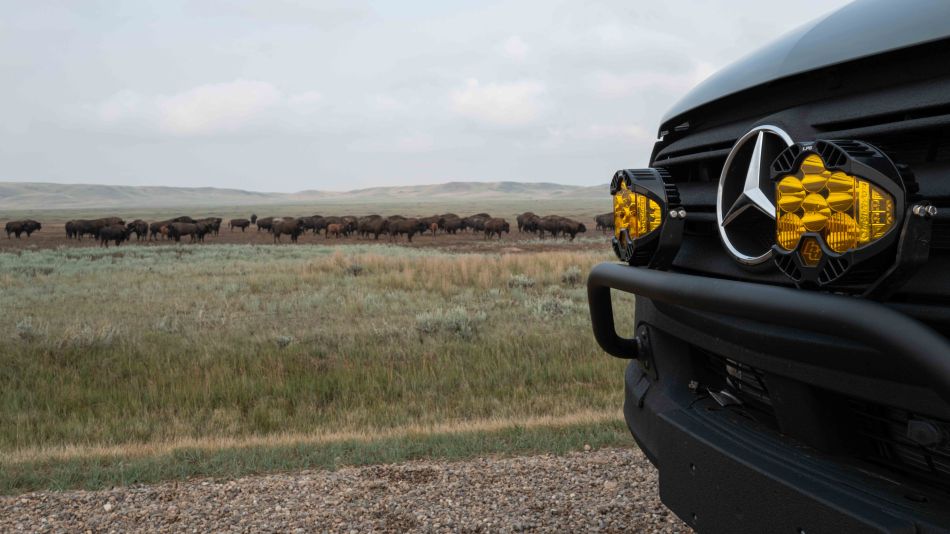
The Voyages of RV Shearwater (4)
Grasslands National Park is a cultural and natural heritage gem, located in the Canadian Prairies in southern Saskatchewan. This massive area (907 km2/224,128 acres) was formally established in 2001 under the Canada National Parks Act to “preserve a representative portion of the Canadian mixed grass prairie ecosystem.”
I travelled east from Calgary to camp in the West Block of Grasslands National Park with Aspen the Airedale and RV Shearwater in July 2025 as part of a long-term photography project exploring the southern frontier of Canada with the USA.
Plant diversity
There is a wide diversity of vegetation in this semi-arid landscape, with mixed grasslands over rolling hills, interspersed with steep-sided dry ravines, or coulees, and wetter areas in the valleys of the Frenchman River in the West Block, and Rock Creek in the East Block.
The native grass species include spear grass, wheat grass and blue gramma grass, important food for grazing by the vast herds of bison that used to roam the plains (and have been reintroduced in smaller numbers) and contemporary cattle herds within the park boundaries that are managed through grazing and haying agreements with ranchers to help conserve the biodiversity value of native grasslands that are threatened elsewhere in Canada by agricultural development.
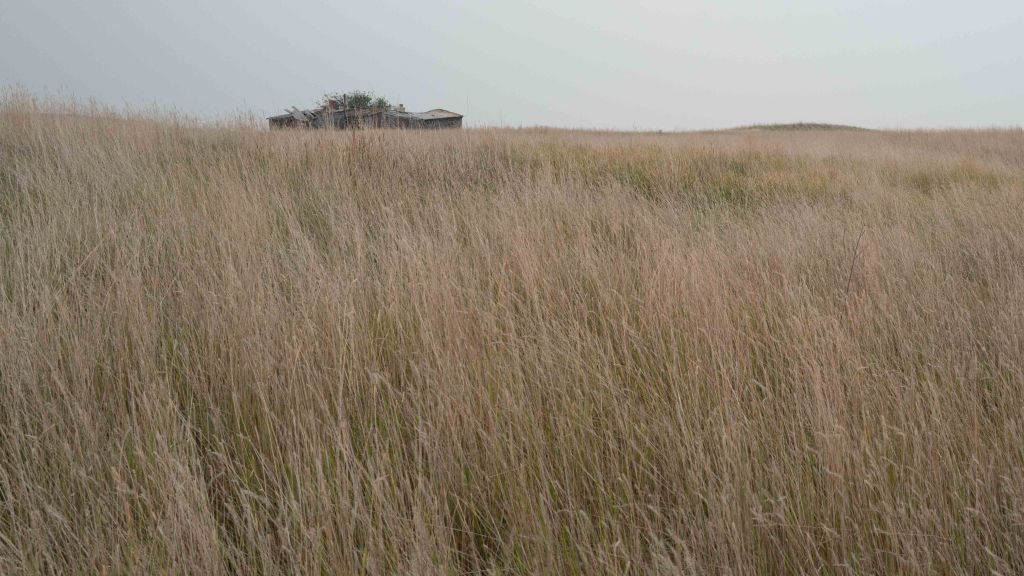
Abandoned Larson homestead, Grasslands National Park. © J. Ashley Nixon
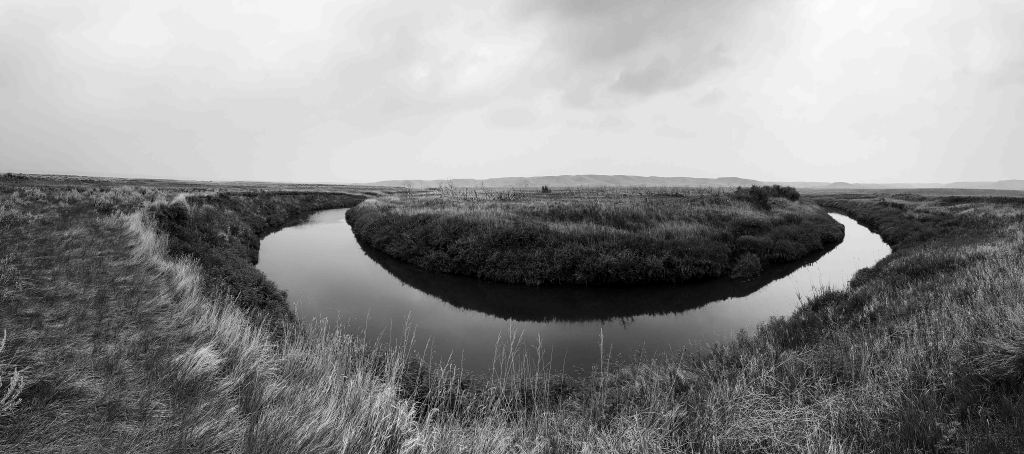
Frenchman River, Grasslands National Park. © J. Ashley Nixon
Desert species such as prickly pear cactus, greasewood and sagebrush are important members of the plant community in the drier areas. The sage offers up a nice botanical scent as you walk through; the ground cactus can be troublesome, though, for a doggy’s paws. In more moist areas, trees and shrubs such as aspen, green ash, wolf willow, and buffalo berry can be found, further supporting the park’s rich avifauna.
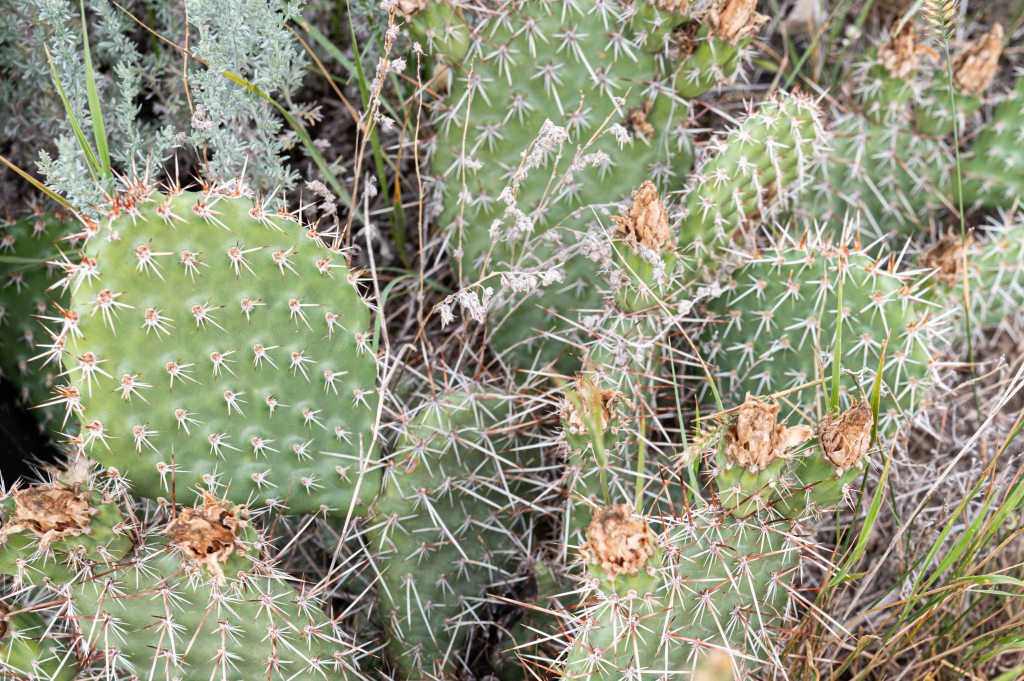
Prickly pear, Grasslands National Park. © J. Ashley Nixon
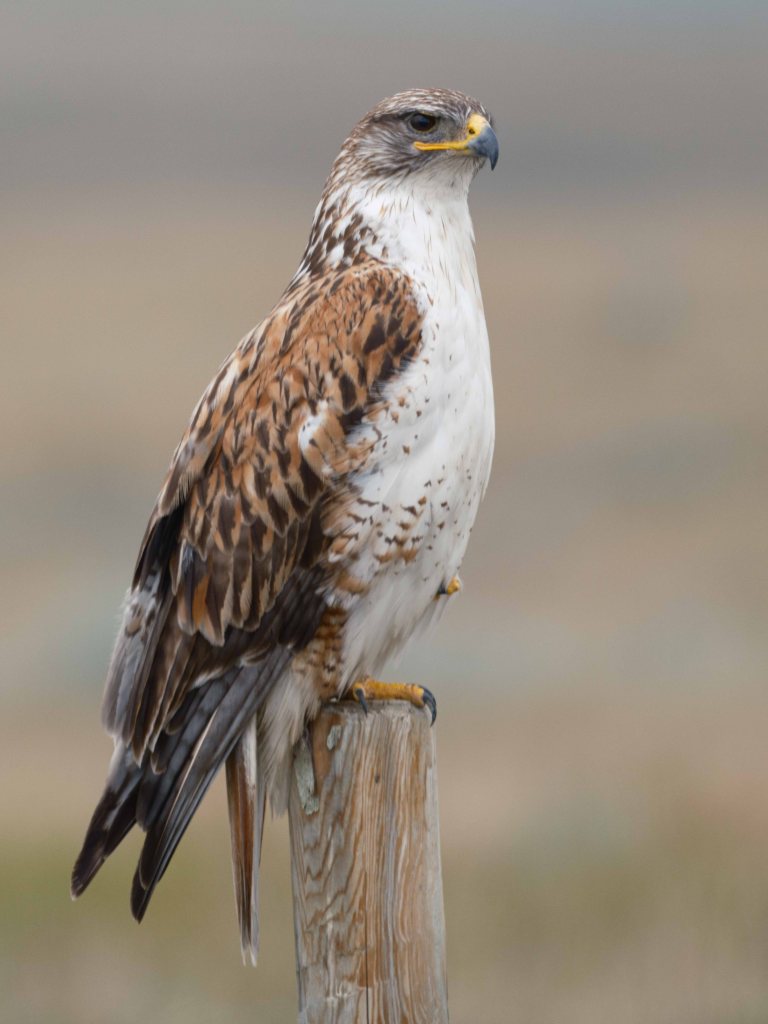
Ferruginous hawk, near Grasslands National Park. © J. Ashley Nixon
Dog towns and bison herds
Over 30 endangered and threatened faunal species live in Grasslands National Park, including Burrowing owl, Greater sage grouse, Swift fox, Plains bison and Black-tailed prairie dog. Colonies of the highly sociable rodents can be readily observed in several “dog towns” across the park (but nowhere else in Canada). The slim chance of seeing a bison herd (reintroduced to Grasslands National Park in 2005, after an absence of 120 years) depends upon your travels coinciding with their roaming.

Black-tailed prairie dog, Grasslands National Park. © J. Ashley Nixon

Plains bison, Grasslands National Park. © J. Ashley Nixon
Tipi rings and corrals
Seeing one of the many tipi rings from an ancient campsite or the relics of a bison drive lane provides a tangible reminder of the long and strong association (over 10,000 years) that Indigenous Peoples from the Nakoda (Assiniboine), Nehiyawak (Plains Cree), Niitsitapi (Blackfoot), Dakota and Lakota (Sioux) Nations have had with the prairies here. Abandoned corrals, old hay fields, and the Walt Larson and family homestead leave evidence of the ranching life that existed until the 1980s, when arrangements were put in place to turn the area into a National Park.
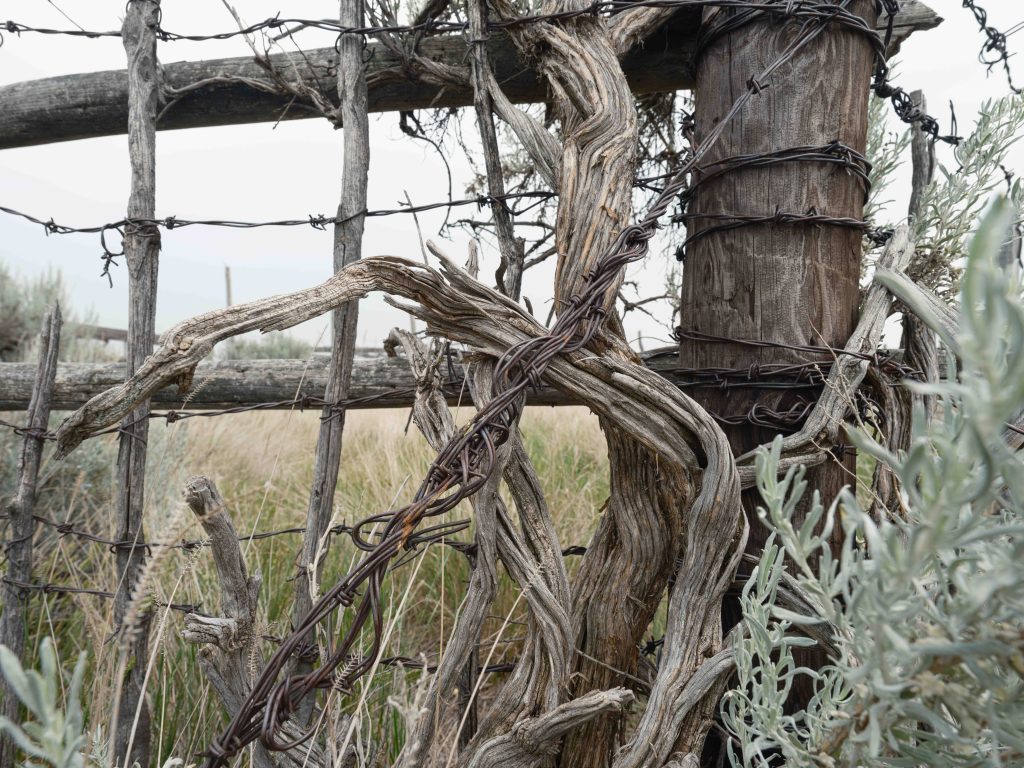
Abandoned corral with sagebrush, Grasslands National Park. © J. Ashley Nixon
The Voyages of RV Shearwater
The Voyages of RV Shearwater is an occasional series that logs my adventures with Shearwater, my Sprinter Van, crafted with care by Yama Vans in the foothills of the Rocky Mountains.
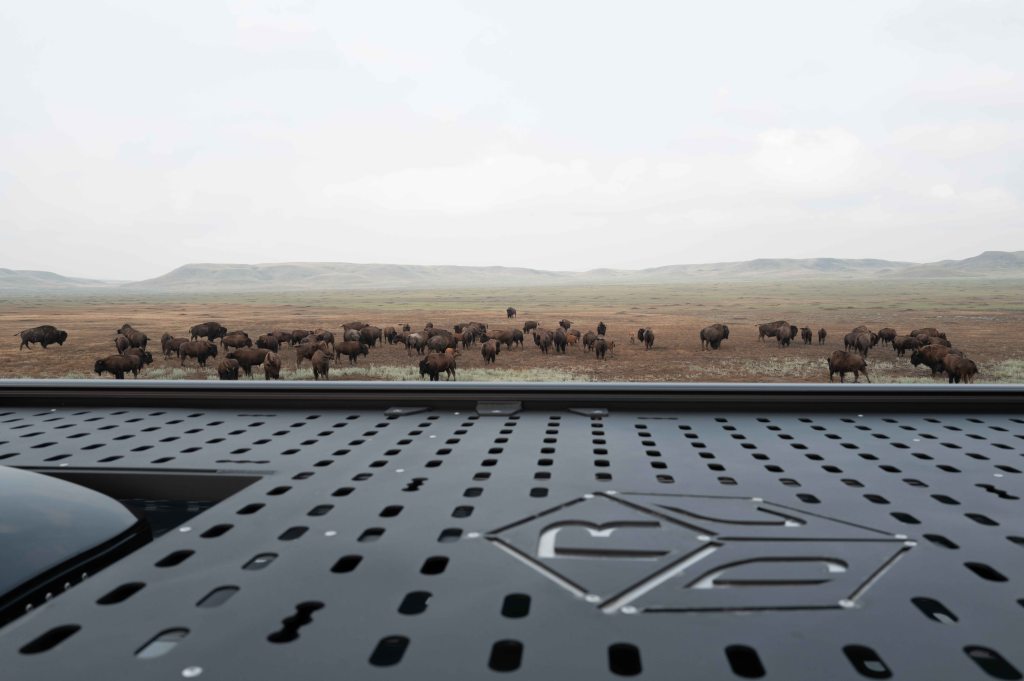
Plains bison observed from the roof of Shearwater, Grasslands National Park. © J. Ashley Nixon


Shearwater and Aspen the Airedale, Grasslands National Park. © J. Ashley Nixon
Location
Grasslands National Park is situated in southern Saskatchewan, close to the Canadian frontier with Montana, USA. The West Block (where I visited) can be accessed on gravel roads starting near the village of Val Marie on Hwy #4 and Hwy #18. Val Marie is a one and a half hour drive south of Swift Current. The Park’s East Block can be accessed near the town of Wood Mountain on Hwy #18.
 NixonScan
Pingback: The name of the van – NixonScan
Superb description bro!
Felt like I was there. I wish! x
LikeLike
Thank you. It’s grand to know that you can feel this splendid grassland place.
LikeLiked by 1 person
Pingback: 25 pics from ’25 – NixonScan