

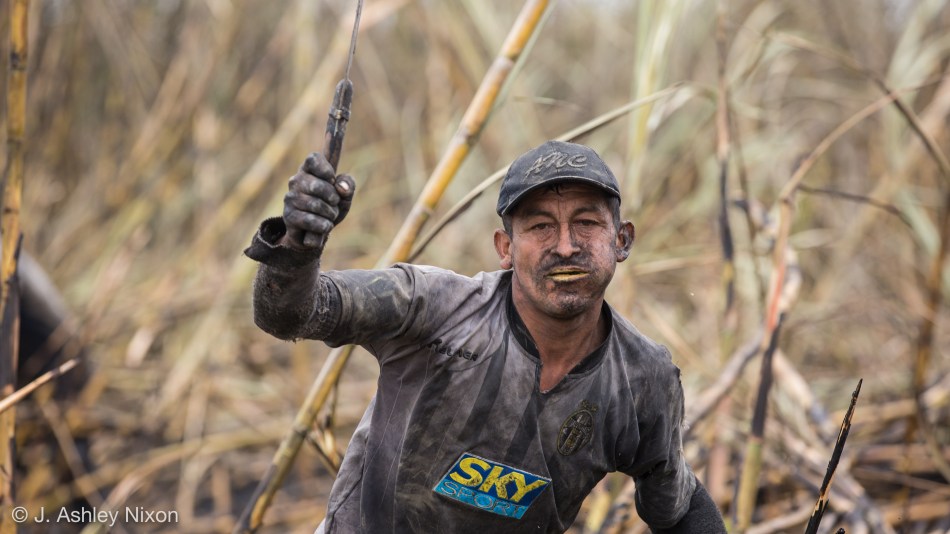
Have you ever wondered what it takes to get that sugar you need to get your tea or coffee feeling just right in the morning?
These photographs and a documentary film about sugarcane plantation workers in Peru were made in 2016. You can see the film plus a Behind the Scenes film via the links at the end of this blog.
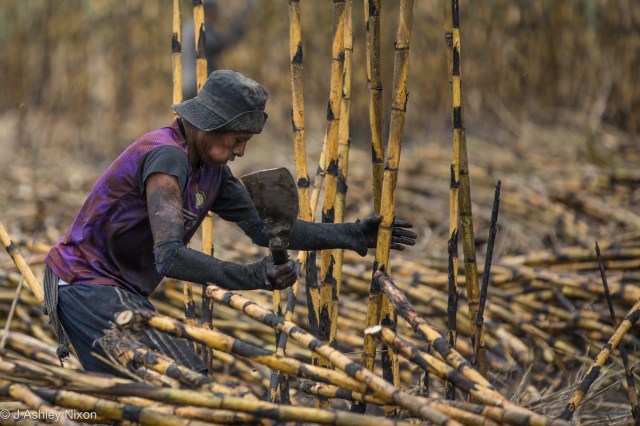
Plantations in Peru
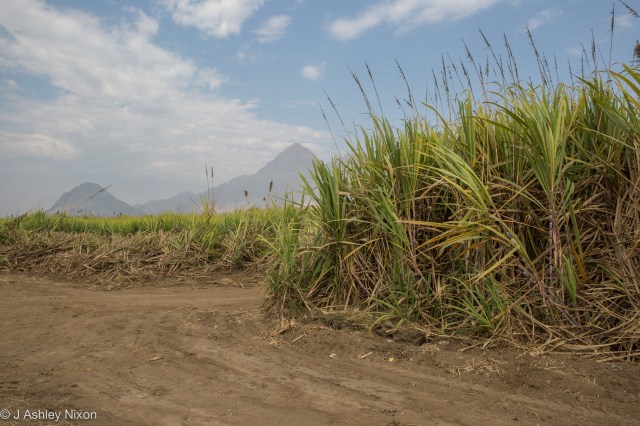
Sugarcane plantations were first developed in the 16th century by Spanish colonists in the river valleys that run from the Andes mountains through the desert-like coast and into the Pacific Ocean. Most of the production today comes from the La Libertad region, where my film was made. Sugar plantations also exist in Lambayeque further north and the Lima region to the south.
© J. Ashley Nixon
Sugar production and consumption
Historically, slaves taken from Africa worked forcibly on these and other plantations across South America. Today, paid workers are employed, but it is still hard, demanding labour. Sugar cane is cut and transported to mills towns such as Casa Grande and Cartavio, home of the Cartavio Sugar Company, famous for its rum since 1891.
In 2016, around 1.4 million tonnes of sugar was produced in Peru. It’s a lot of sweetness but still not enough to meet the country’s demand, which was about 1.6 million tonnes that year. As incomes rise in the country, people are eating more sweet confectionary and drinks, so that gap may rise. Another factor is the fermentation of sugar to make ethanol, which began in 2009, driven by a mandate for blending 8.7% ethanol into petrol in Peru.
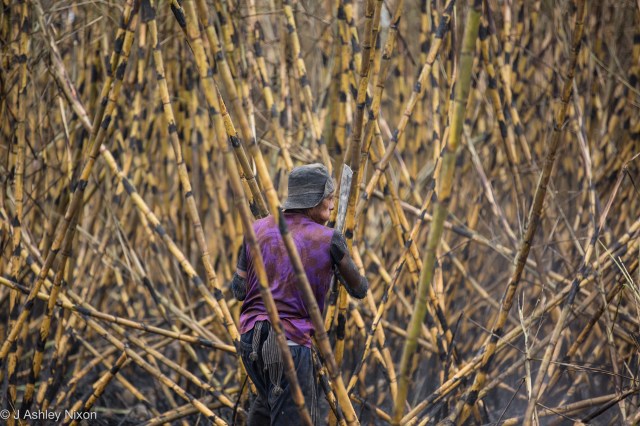
About 100 kg of sugar cane must be cut to produce 1kg of sugar. And while there are plantations that use cutting machines, many still rely on gangs of workers using machetes.
Hard, not sweet work
It’s brutally hard work, and the plantation workers look a bit like coal miners in the fields. This is because they first set controlled fires in the plantations to remove some of the vegetation and move along snakes. That clears the area pretty well but creates a lot of soot, which mixes with the oozing sugar every time a cane is cut, spreading quickly all over their clothes and faces.
© J. Ashley Nixon
Water demands
Sugar cane is a really thirsty crop, but there’s not much rainfall here. So water has to be provided using extensive irrigation systems, which are under pressure now as many growers seek to get more, and a greater variety of crops out of these arid desert soils.
It’s thirsty work as well for the cutters. Many of these men, and it tends to be male-dominated labour, came down to the coastal plains from the Andes mountains for work. Some use a traditional remedy to help them deal with thirst, hunger, and fatigue that comes quickly when cutting and stacking tons of cane every 12-hour shift. Coca leaves are placed in the mouth and sucked on throughout the day. Alternatively, an extract is prepared from the leaves and applied inside the mouth using a small needle.
Artisanal industry
As well as the bigger processing mills, an artisanal industry is found in numerous shops or kiosks along roadsides in the sugar-growing areas in the north of Peru.
The one shown here shows a family working together to strip the outside of the cane and then cut it into cubes. It’s a popular, sugary snack for children and adults to pop in their mouths and suck like candy.
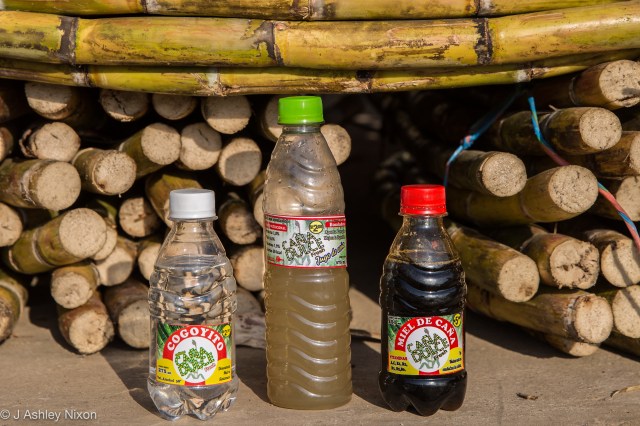
The sugar is also squeezed out to make Caña Dulce or the super sugary drink, Miel de Caña. It’s also fermented and distilled to make an alcoholic drink like rum, called Cogoyito. After all, ethanol is not just for cars!
For more images from this assignment, please visit my photography website.
See the films
You can see my film, Sugar, here and how I produced it in this Behind the Scenes film.
© J. Ashley Nixon
 NixonScan
Pingback: Writing about Images: 17 pics from ’17 | NixonsCan